


Summer Travel Scams Are Evolving: How Cybercriminals Are Targeting Vacationers in 2026
Planning a summer getaway should be exciting, not stressful. Unfortunately, cybercriminals are becoming increasingly sophisticated, using AI-generated content, fake booking websites, phishing messages, and social engineering tactics to exploit travelers. As travel demand surges during peak vacation seasons, scammers see an opportunity to target unsuspecting tourists searching for deals online.
In this blog, we’ll explore the most common travel scams in 2026, how these scams work, and the cybersecurity best practices travelers should follow to protect their money, personal information, and travel plans.
Why Travel Scams Are Increasing
The travel industry has become a prime target for cybercriminals. High booking volumes, limited availability, and consumers’ desire to secure the best deals create a sense of urgency that scammers exploit. Additionally, AI-powered tools now allow fraudsters to create convincing fake websites, deepfake videos, and realistic phishing messages that are harder than ever to detect.
Recent reports show that a significant percentage of travelers have encountered travel-related scams, with many victims losing hundreds or even thousands of dollars through fraudulent bookings and payment schemes.
Common Summer Travel Scams to Watch For
1. Fake Hotel and Vacation Rental Listings
One of the most common travel scams involves fraudulent accommodation listings. Cybercriminals use stolen images, AI-generated photos, or copied property descriptions to create fake vacation rentals and hotel offers at heavily discounted prices.
Victims often discover the scam only after arriving at the destination, finding that the property doesn’t exist or was never available for rent.
Warning Signs:
- Prices significantly below market value
- Limited or suspicious reviews
- Requests for payment outside official booking platforms
- Poorly written property descriptions
2. Phishing Text Messages About Toll Fees
Travelers driving during holidays are increasingly targeted with fake toll payment texts claiming unpaid balances. These messages create urgency by threatening penalties or additional charges.
The included link directs victims to fraudulent payment portals designed to steal credit card information and personal data.
Warning Signs:
- Unexpected toll notifications
- Urgent payment demands
- Shortened or suspicious links
- Requests for personal information
3. Fake Airline and Hotel Websites
Cybercriminals create websites that closely resemble legitimate airline, hotel, and travel booking platforms. These lookalike sites often appear in search engine advertisements and collect payment information, passport details, and login credentials.
How to Stay Safe:
- Type website addresses directly into your browser
- Verify domain names carefully
- Use official travel apps whenever possible
- Avoid clicking sponsored links without verification
4. Spear-Phishing Using Real Reservation Data
A concerning trend involves attackers using actual hotel reservation information to create highly convincing phishing messages. Travelers may receive emails, SMS messages, or WhatsApp notifications that reference real booking details, making the scam appear legitimate.
These messages often request payment verification or booking confirmation updates and lead victims to fraudulent websites.
5. Fake Visa and Travel Document Services
Scammers also target travelers needing passports, visas, international driving permits, or expedited travel documents. Fraudulent websites often charge excessive fees for free government services or offer fake processing assistance.
Best Practice: Always use official government websites when applying for travel documents.
The Role of AI in Modern Travel Scams
Artificial intelligence has transformed cybercrime. Fraudsters can now generate realistic customer service agents, clone voices, create deepfake videos, and produce professional-looking websites within minutes.
These technologies make scams appear authentic and significantly increase the likelihood that travelers will trust fraudulent communications. Security experts warn that visual and audio evidence can no longer be automatically trusted online.
Cybersecurity Risks While Traveling
Travel scams don’t stop once you reach your destination. Travelers often engage in risky digital behaviors that increase exposure to cyber threats.
Common risks include:
- Using unsecured public Wi-Fi networks
- Accessing banking apps on public internet connections
- Scanning unknown QR codes
- Clicking travel-related links from unsolicited messages
- Sharing real-time travel updates on social media
These activities can expose personal information, login credentials, and financial data to cybercriminals.
How to Protect Yourself From Travel Scams
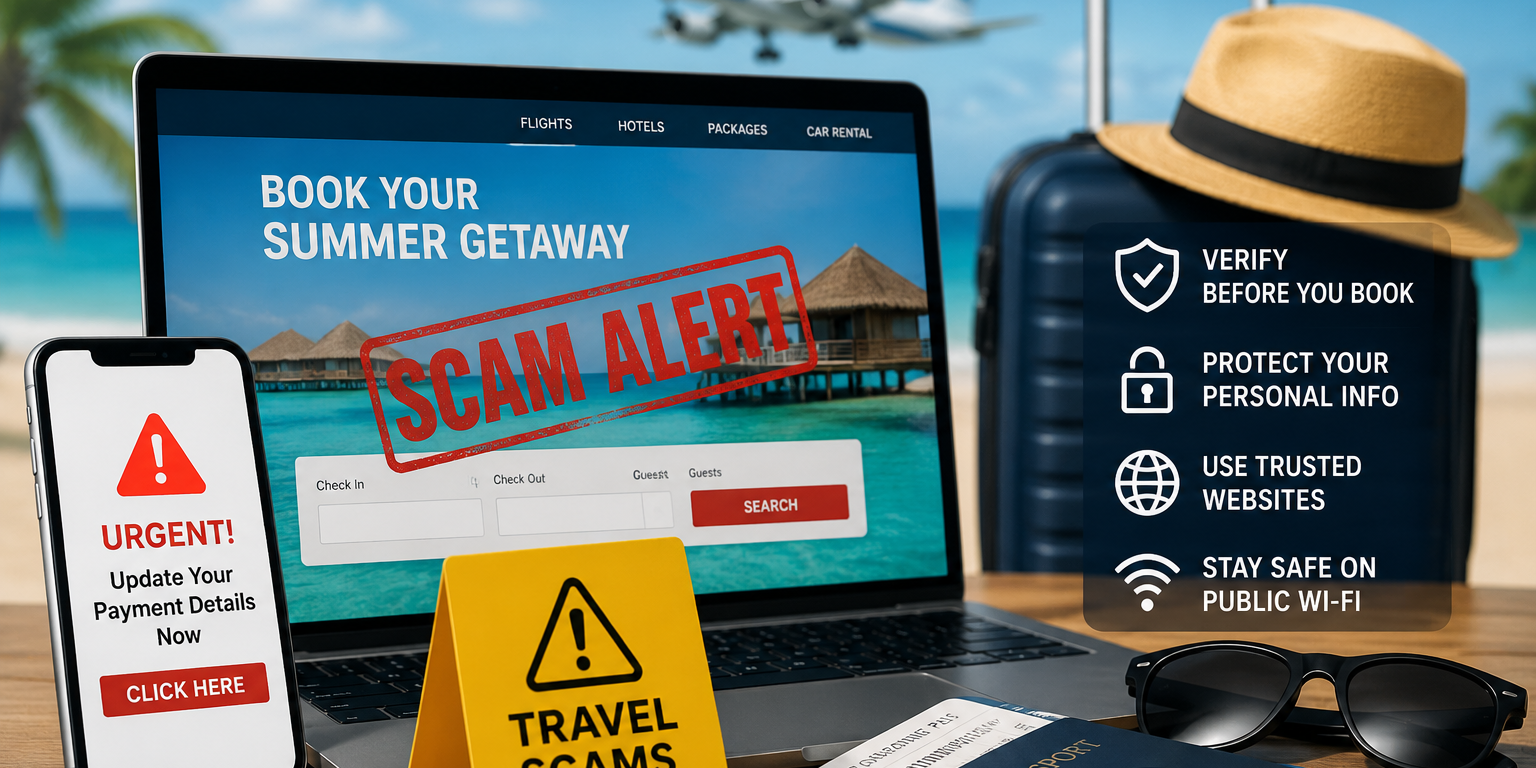
Verify Before You Book
Research accommodations thoroughly before making payments. Check multiple review sources and verify that the property exists through independent searches.
Use Official Booking Channels
Book directly through reputable airlines, hotels, and trusted travel platforms whenever possible. Avoid off-platform payment requests.
Enable Multi-Factor Authentication
Protect travel accounts with multi-factor authentication (MFA) to reduce the risk of account compromise. This is especially important for email accounts linked to travel bookings.
Use a VPN on Public Wi-Fi
A Virtual Private Network (VPN) encrypts internet traffic and helps protect sensitive information when using airport, hotel, or public Wi-Fi networks.
Be Skeptical of Urgency
One of the strongest indicators of a scam is pressure to act immediately. Scammers frequently use fear, urgency, and limited-time offers to bypass rational decision-making.
Verify Communications Independently
If you receive a message regarding a booking issue, contact the airline, hotel, or travel provider directly using official contact information rather than responding to the message itself.
What Businesses Can Learn From Rising Travel Scams
The travel industry’s growing exposure to cyber threats highlights the importance of cybersecurity awareness for organizations as well. Travel agencies, hospitality businesses, and booking platforms must strengthen employee security training, implement MFA, monitor phishing threats, and educate customers about common scam tactics.
Organizations that proactively address cybersecurity risks can better protect customer trust and reduce financial and reputational damage caused by fraud.
Final Thoughts
Travel scams are becoming more sophisticated, leveraging AI, stolen data, and advanced social engineering techniques to target vacationers. While technology continues to evolve, the most effective defense remains awareness and vigilance.
By verifying travel offers, avoiding suspicious links, using secure connections, and maintaining a healthy level of skepticism, travelers can significantly reduce their risk of becoming victims of cybercrime.
As the summer travel season continues, cybersecurity should be as essential to your travel checklist as your passport and boarding pass. Staying informed could be the difference between a memorable vacation and a costly scam