


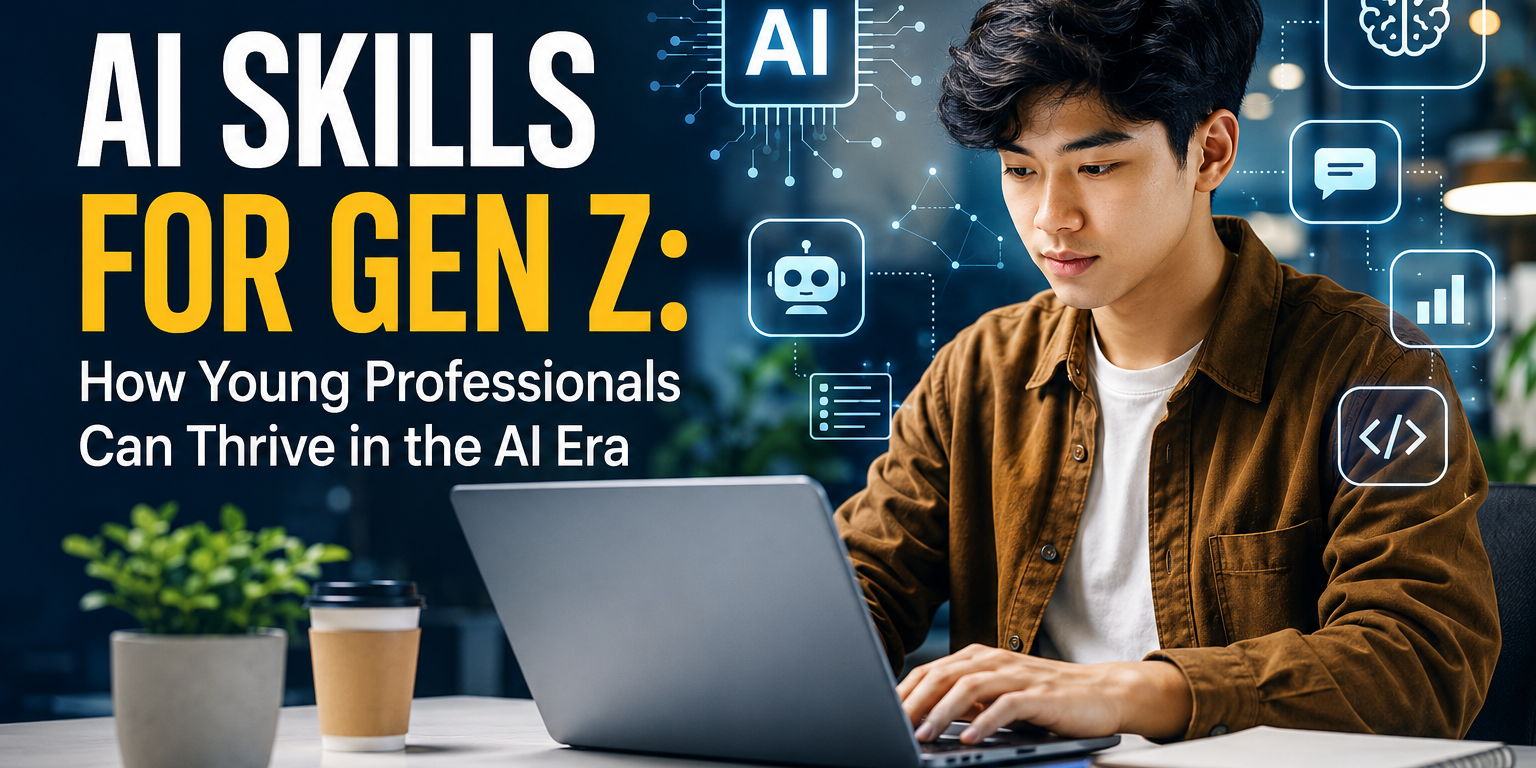
Artificial intelligence is reshaping industries faster than ever before, creating both opportunities and challenges for today’s workforce. While many assume Gen Z has an advantage simply because they grew up with technology, that isn’t always the case. In reality, developing strong AI skills for Gen Z requires much more than knowing how to use chatbots or AI-powered apps. Instead, success depends on learning how to use AI strategically, think critically, and adapt continuously as technology evolves.
Why AI Skills for Gen Z Matter More Than Ever
The workplace is changing rapidly, and employers are looking for candidates who can work alongside AI rather than compete against it. According to a recent CIO article, the biggest challenge isn’t access to AI tools—it’s knowing how to use them effectively. Many graduates are entering the job market with traditional technical knowledge but limited experience in AI workflows, cloud technologies, and prompt engineering.
As a result, having AI skills is becoming just as important as having strong communication or problem-solving abilities.
The AI Divide Is About Readiness, Not Access
Most students today have access to AI tools. However, not everyone knows how to use them productively.
Some educational institutions have already started integrating AI into their curriculum. Others, however, are still cautious or even discourage students from using AI in academic work. Consequently, students receive very different levels of AI exposure depending on where they study.
This growing gap isn’t about technology itself. Instead, it’s about preparedness. Those who actively learn AI are likely to have a significant advantage when entering the workforce.
Three Types of AI Users Among Gen Z
Not everyone uses AI in the same way. Understanding these different approaches can help young professionals identify where they stand and how they can improve.
The AI Explorer
These individuals regularly experiment with AI tools, learn new prompting techniques, and continuously refine their workflows. Rather than accepting the first response, they ask follow-up questions, verify information, and improve the output through multiple iterations.
As a result, they develop practical AI skills that employers increasingly value.
The Occasional User
Many people use AI only when they need quick answers or help with simple tasks. While this approach saves time, it rarely builds deeper knowledge or long-term expertise.
For example, asking AI to summarize an article is useful. However, learning how to guide AI through research, editing, or data analysis creates much greater value.
The Skeptic
Some individuals avoid AI altogether because they worry it will replace jobs or reduce creativity. Although these concerns are understandable, refusing to learn AI may create even bigger career challenges in the future.
Instead of avoiding the technology, learning how to use it responsibly can help professionals stay competitive.
Essential AI Skills for Gen Z to Develop
Fortunately, building AI expertise doesn’t require a computer science degree. Instead, young professionals should focus on developing practical skills that apply across industries.
Learn Prompt Writing
Knowing how to ask AI clear, detailed questions often leads to better results than simply relying on basic commands.
The better your prompts, the more useful your AI-generated outputs become.
Strengthen Critical Thinking
AI can generate impressive responses, but it isn’t always correct. Therefore, users must verify facts, identify errors, and evaluate whether information is accurate before relying on it.
Critical thinking remains one of the most valuable human skills in the AI era.
Build Digital Literacy
Understanding how AI models work, where their information comes from, and what their limitations are helps users make smarter decisions.
Moreover, digital literacy includes recognizing misinformation, protecting privacy, and using AI ethically.
Keep Learning
AI technology evolves almost every month. Consequently, continuous learning has become essential rather than optional.
Reading industry news, completing online courses, and experimenting with new AI tools can help professionals stay ahead of changing workplace demands.
Why Human Judgment Still Matters
Although AI can automate repetitive work, it cannot replace human judgment, creativity, or accountability.
Businesses still need employees who can make informed decisions, solve unexpected problems, and understand the broader context behind every task.
For example, AI may generate a report in seconds. However, people must still decide whether the information is accurate, appropriate, and useful before sharing it with clients or colleagues.
This combination of AI efficiency and human decision-making will become increasingly valuable across industries.
How Businesses Can Help Young Professionals
Organizations also have an important role to play. Rather than expecting new employees to figure everything out themselves, companies should invest in AI training programs, mentorship, and hands-on learning opportunities.
Furthermore, experienced professionals and younger employees can learn from one another. While senior employees contribute industry knowledge and strategic thinking, younger professionals often bring fresh perspectives and confidence with emerging technologies.
When these strengths are combined, businesses can adapt to AI much more effectively.
Building AI Skills for Gen Z Starts Today
The future workplace won’t simply reward people who use AI—it will reward those who know how to use it thoughtfully. Developing practical AI skills, improving critical thinking, and embracing continuous learning can help Gen Z stay competitive regardless of how technology evolves.
Rather than viewing AI as a threat, young professionals who invest in learning today will be better prepared for tomorrow’s opportunities.