



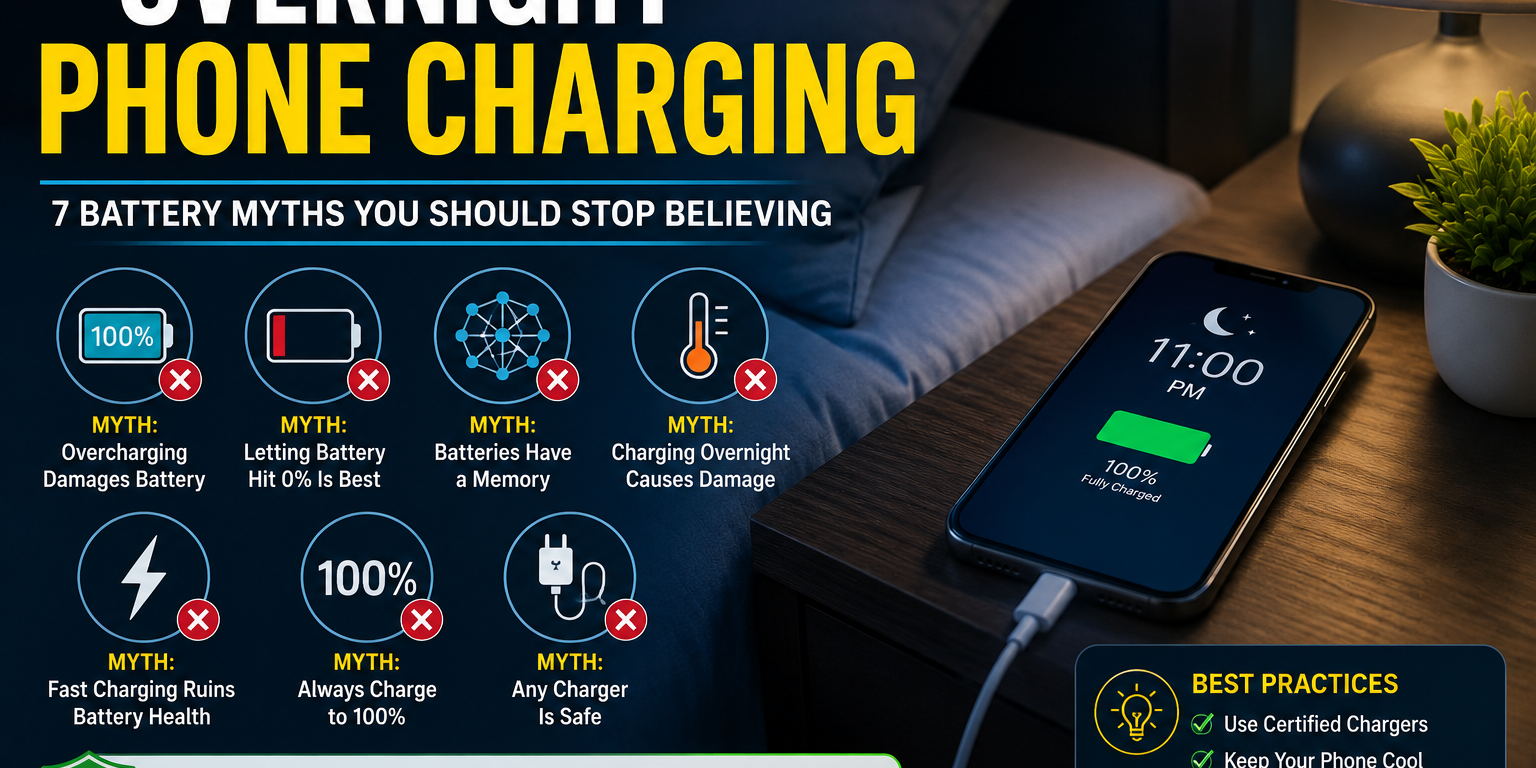
Overnight Phone Charging: 7 Battery Myths You Should Stop Believing
If you’ve ever plugged in your phone before bed and wondered whether you’re damaging the battery, you’re not alone. Overnight phone charging has been surrounded by myths for years, leaving many smartphone users confused about what’s actually safe.
Some people believe charging your phone overnight will overcharge the battery, while others insist you should always let your battery drain to 0% before recharging. The truth is that modern smartphones are much smarter than many people realize.
Understanding the facts behind overnight phone charging can help you maximize battery life, improve device performance, and avoid unnecessary battery anxiety.
Why Overnight Phone Charging Isn’t What It Used to Be
Modern smartphones use advanced lithium-ion batteries and intelligent power management systems that automatically regulate charging. Once your battery reaches 100%, the charging process stops, preventing dangerous overcharging.
While battery technology has improved significantly over the years, several outdated myths continue to circulate online.
Let’s separate fact from fiction.
Myth #1: Overnight Phone Charging Overloads the Battery
One of the most common misconceptions is that leaving your phone plugged in overnight causes it to overload.
The Truth
Modern smartphones are designed to prevent overcharging. Internal charging controllers stop delivering power once the battery reaches full capacity. The device only draws additional power when needed to maintain charge levels.
For most users, overnight phone charging will not cause immediate battery damage.
Myth #2: You Should Always Let Your Battery Reach 0%
Many people still believe batteries should be completely drained before recharging.
The Truth
This advice applied to older battery technologies such as nickel-cadmium batteries. Today’s lithium-ion batteries actually perform better when they avoid deep discharges. Frequently allowing a battery to reach 0% can contribute to faster wear over time.
Better Practice
Recharge your phone when it drops to around 20% to 30% rather than waiting for it to die completely.
Myth #3: Overnight Phone Charging Causes Immediate Battery Damage
Many users fear that charging overnight automatically shortens battery lifespan.
The Truth
The larger concern isn’t overnight charging itself—it’s heat.
Lithium-ion batteries naturally degrade over time regardless of how they’re charged. However, excessive heat can accelerate this process. If a phone becomes hot while charging, battery health may decline more quickly.
Keep Your Phone Cool
Avoid charging:
- Under pillows
- Under blankets
- In direct sunlight
- In excessively hot environments
Proper ventilation is far more important than whether charging occurs overnight.
Myth #4: Your Phone Battery Has a Memory
You’ve probably heard someone say that batteries develop a “memory” if they aren’t fully discharged.
The Truth
Modern lithium-ion batteries do not suffer from memory effects. This issue primarily affected older rechargeable battery technologies used years ago. Today’s smartphone batteries do not need complete discharge cycles to maintain performance.
Battery aging is caused by normal chemical wear, not memory formation.
Myth #5: Fast Charging Destroys Battery Health
Fast charging often receives blame for battery degradation.
The Truth
Fast charging generates more heat than standard charging, but modern devices are specifically engineered to manage these temperatures safely. Battery health is influenced more by heat exposure and charging habits than by fast charging alone.
For most business professionals and smartphone users, the convenience of fast charging outweighs any minimal long-term impact.
Myth #6: You Should Always Charge to 100%
Many users assume reaching 100% is the ideal charging goal.
The Truth
Battery experts generally agree that lithium-ion batteries experience less stress when maintained between approximately 20% and 80%. While charging to 100% occasionally is perfectly fine, consistently keeping a battery at full capacity may contribute to gradual wear over time.
Use Optimized Charging Features
Many Android and iPhone devices now include battery optimization settings that delay reaching 100% until shortly before you typically wake up.
Myth #7: Any Charger Is Safe to Use
A charger is a charger, right?
The Truth
Not all charging accessories meet the same safety and quality standards.
Using low-quality or counterfeit chargers can increase the risk of overheating, inconsistent charging, and long-term battery damage. Certified chargers and cables help ensure safe power delivery and reliable charging performance.
Always choose reputable charging accessories that meet your device manufacturer’s specifications.
Best Practices for Overnight Phone Charging
If you regularly charge your phone overnight, follow these simple recommendations:
Use Certified Chargers
Stick with manufacturer-approved or high-quality certified accessories.
Enable Battery Optimization Features
Most modern smartphones include adaptive charging settings that improve long-term battery health.
Avoid Heat Buildup
Charge your device on a hard, flat surface where heat can dissipate properly.
Remove Thick Cases if Necessary
If your phone tends to get warm while charging, removing a heavy protective case can help reduce heat retention.
Keep Software Updated
Manufacturers frequently improve battery management systems through software updates.
The Real Enemy of Battery Health
When it comes to smartphone batteries, heat—not overnight phone charging—is often the biggest concern.
Battery experts consistently identify high temperatures as one of the leading causes of accelerated battery degradation. Whether you’re charging overnight or during the day, keeping your device cool will have a greater impact on battery longevity than obsessing over charging percentages.The good news is that overnight phone charging is generally safe for modern smartphones. Advanced battery management systems prevent overcharging, and many long-standing charging myths simply no longer apply to today’s devices.
Rather than worrying about charging overnight, focus on practices that truly matter:
- Avoid excessive heat
- Use quality chargers
- Keep batteries between moderate charge levels when possible
- Enable built-in battery optimization features
By following these simple guidelines, you can extend your smartphone’s battery life and keep your device performing at its best for years to come.