


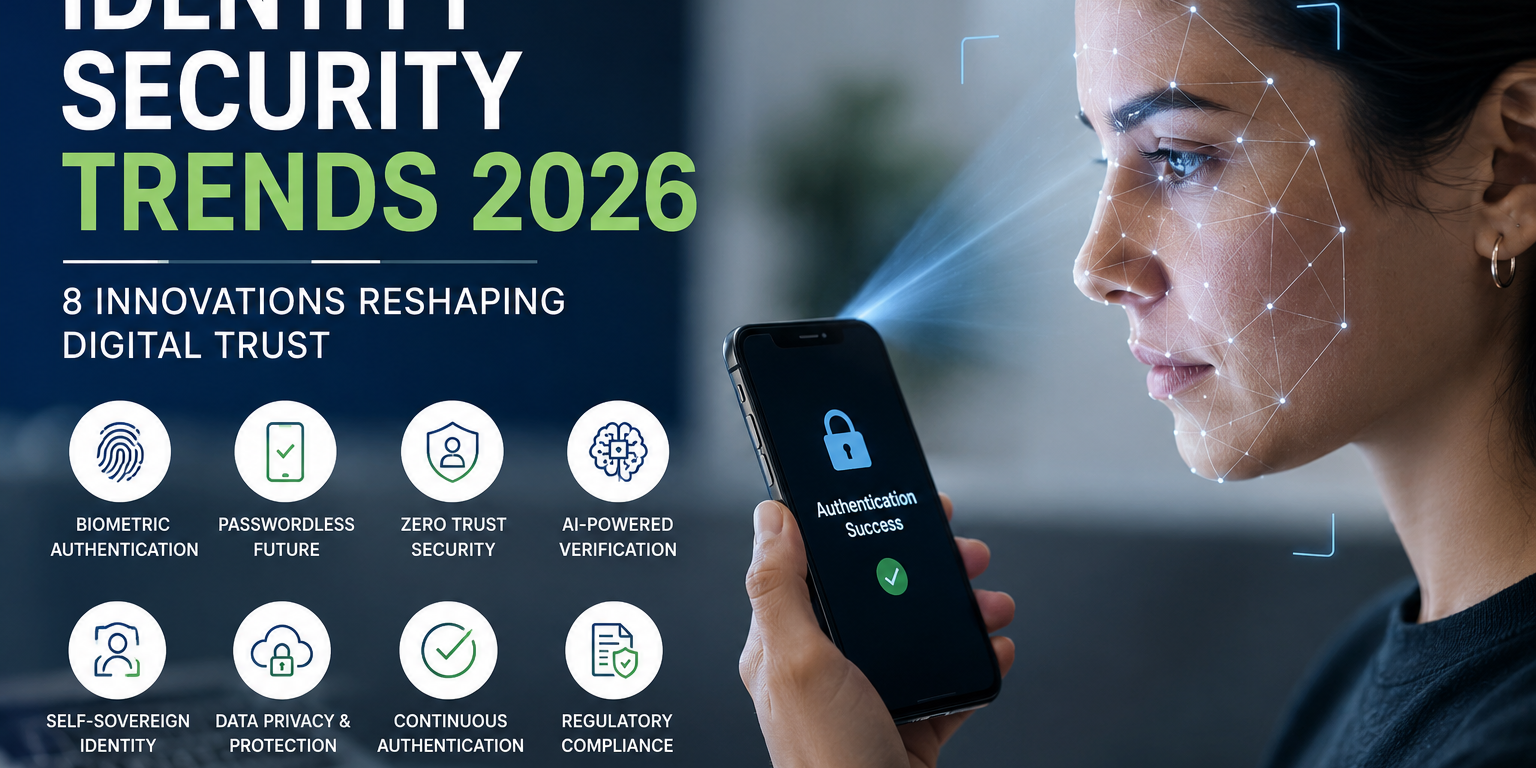
Identity Security Trends 2026: 8 Innovations Reshaping Digital Trust
As cyber threats continue to evolve, Identity Security Trends 2026 are changing how organizations protect users, data, and digital assets. Traditional passwords, access cards, and security questions are gradually being replaced by smarter, faster, and more secure identity verification methods.
Today, identity has become the new security perimeter. Businesses are investing heavily in biometrics, AI-driven authentication, privacy-first architectures, and continuous verification systems to stay ahead of increasingly sophisticated cybercriminals. Understanding the latest Identity Security Trends 2026 can help organizations strengthen security while improving user experience.
Why Identity Security Matters More Than Ever
The modern workplace is increasingly digital, cloud-based, and interconnected. Employees access systems from multiple devices and locations, making traditional security models less effective. Attackers are now focusing on stealing credentials and impersonating legitimate users rather than exploiting technical vulnerabilities. As a result, identity has become one of the most critical areas of cybersecurity.
Identity Security Trends 2026: The 8 Biggest Changes
1. Industry-Specific Biometric Authentication
One of the most important Identity Security Trends 2026 is the rise of biometric authentication tailored to specific industries.
Airports are adopting facial recognition for seamless passenger verification, banks are replacing knowledge-based authentication with biometric verification, and government agencies are streamlining citizen services through digital identity solutions. These systems create a smoother user experience while strengthening security.
2. Self-Service Identity Verification Is Expanding
Businesses are rapidly deploying self-service kiosks and automated identity verification systems.
Hotels, hospitals, retail stores, and transportation hubs are leveraging facial recognition and biometric authentication to speed up check-ins, payments, and customer onboarding. This reduces wait times while improving accuracy and security.
3. Multimodal Biometrics Become the Standard
Another major Identity Security Trends 2026 development is the adoption of multimodal biometrics.
Instead of relying on a single identifier such as a fingerprint, organizations are combining facial recognition, fingerprints, voice authentication, and behavioral analytics. This layered approach significantly reduces fraud while maintaining convenience for users.
AI and Identity Security: A Powerful Combination
AI-Powered Fraud Detection and Liveness Verification
Artificial intelligence is playing a crucial role in identity security.
As deepfakes and sophisticated spoofing attacks become more common, AI-powered systems can analyze facial movements, voice patterns, and behavioral characteristics to verify whether a user is genuinely present. Advanced liveness detection is becoming a critical defense against identity fraud.
Continuous Authentication and Zero Trust Security
Traditional login systems verify users only once. However, Identity Security Trends 2026 show a clear shift toward continuous authentication.
Organizations are implementing behavioral biometrics that monitor typing patterns, mouse movements, touchscreen interactions, and other unique user behaviors throughout an entire session. This aligns perfectly with Zero Trust security frameworks that continuously verify every user and device.
Privacy-First Identity Security Solutions
Self-Sovereign Identity (SSI)
Privacy concerns continue to shape the future of identity management.
Self-Sovereign Identity (SSI) allows individuals to control their own identity credentials through secure digital wallets rather than storing sensitive information in centralized databases. This reduces the risk of large-scale data breaches and gives users greater control over personal information.
Edge Processing and Data Protection
A growing number of organizations are processing biometric data directly on local devices instead of transmitting it to cloud servers.
This approach reduces exposure to cyber threats, improves compliance with privacy regulations, and enhances user trust. Privacy-focused identity architectures are becoming a competitive advantage for forward-thinking businesses.
Regulatory Changes Driving Identity Security Trends 2026
Governments and regulatory bodies worldwide are introducing stricter requirements for identity verification, privacy protection, and AI governance.
Organizations are increasingly adopting compliance-ready identity platforms that support global standards while maintaining security and transparency. Regulatory compliance is no longer viewed as a burden but as a foundation for building trust with customers and stakeholders.
Developer-Friendly Identity Security Platforms
Identity security is becoming easier to implement thanks to modern APIs, SDKs, and cloud-native platforms.
Developers can now integrate biometric authentication, passwordless access, and identity verification directly into applications without major infrastructure changes. This democratization of identity security is accelerating adoption across industries.
The Future of Identity Security
The future of cybersecurity is increasingly centered around identity rather than traditional network perimeters. Passwordless authentication, biometrics, AI-driven verification, and continuous authentication are becoming the new standards for digital trust.
Organizations that embrace these Identity Security Trends 2026 will be better positioned to protect users, reduce fraud, meet regulatory requirements, and deliver seamless digital experiences. As cybercriminals continue to evolve their tactics, identity security will remain one of the most critical investments for businesses worldwide.
Final Thoughts
The shift toward identity-centric security is no longer a future prediction—it is happening now. From AI-powered fraud detection and multimodal biometrics to privacy-first identity architectures and passwordless authentication, the latest Identity Security Trends 2026 are redefining how trust is established in the digital world.
Businesses that proactively adopt these innovations will gain stronger security, improved user experiences, and a significant competitive advantage in an increasingly connected world.Identity Security Trends 2026: 8 Innovations Reshaping Digital Trust
As cyber threats continue to evolve, Identity Security Trends 2026 are changing how organizations protect users, data, and digital assets. Traditional passwords, access cards, and security questions are gradually being replaced by smarter, faster, and more secure identity verification methods.
Today, identity has become the new security perimeter. Businesses are investing heavily in biometrics, AI-driven authentication, privacy-first architectures, and continuous verification systems to stay ahead of increasingly sophisticated cybercriminals. Understanding the latest Identity Security Trends 2026 can help organizations strengthen security while improving user experience.
Why Identity Security Matters More Than Ever
The modern workplace is increasingly digital, cloud-based, and interconnected. Employees access systems from multiple devices and locations, making traditional security models less effective. Attackers are now focusing on stealing credentials and impersonating legitimate users rather than exploiting technical vulnerabilities. As a result, identity has become one of the most critical areas of cybersecurity.
Identity Security Trends 2026: The 8 Biggest Changes
1. Industry-Specific Biometric Authentication
One of the most important Identity Security Trends 2026 is the rise of biometric authentication tailored to specific industries.
Airports are adopting facial recognition for seamless passenger verification, banks are replacing knowledge-based authentication with biometric verification, and government agencies are streamlining citizen services through digital identity solutions. These systems create a smoother user experience while strengthening security.
2. Self-Service Identity Verification Is Expanding
Businesses are rapidly deploying self-service kiosks and automated identity verification systems.
Hotels, hospitals, retail stores, and transportation hubs are leveraging facial recognition and biometric authentication to speed up check-ins, payments, and customer onboarding. This reduces wait times while improving accuracy and security.
3. Multimodal Biometrics Become the Standard
Another major Identity Security Trends 2026 development is the adoption of multimodal biometrics.
Instead of relying on a single identifier such as a fingerprint, organizations are combining facial recognition, fingerprints, voice authentication, and behavioral analytics. This layered approach significantly reduces fraud while maintaining convenience for users.
AI and Identity Security: A Powerful Combination
AI-Powered Fraud Detection and Liveness Verification
Artificial intelligence is playing a crucial role in identity security.
As deepfakes and sophisticated spoofing attacks become more common, AI-powered systems can analyze facial movements, voice patterns, and behavioral characteristics to verify whether a user is genuinely present. Advanced liveness detection is becoming a critical defense against identity fraud.
Continuous Authentication and Zero Trust Security
Traditional login systems verify users only once. However, Identity Security Trends 2026 show a clear shift toward continuous authentication.
Organizations are implementing behavioral biometrics that monitor typing patterns, mouse movements, touchscreen interactions, and other unique user behaviors throughout an entire session. This aligns perfectly with Zero Trust security frameworks that continuously verify every user and device.
Privacy-First Identity Security Solutions
Self-Sovereign Identity (SSI)
Privacy concerns continue to shape the future of identity management.
Self-Sovereign Identity (SSI) allows individuals to control their own identity credentials through secure digital wallets rather than storing sensitive information in centralized databases. This reduces the risk of large-scale data breaches and gives users greater control over personal information.
Edge Processing and Data Protection
A growing number of organizations are processing biometric data directly on local devices instead of transmitting it to cloud servers.
This approach reduces exposure to cyber threats, improves compliance with privacy regulations, and enhances user trust. Privacy-focused identity architectures are becoming a competitive advantage for forward-thinking businesses.
Regulatory Changes Driving Identity Security Trends 2026
Governments and regulatory bodies worldwide are introducing stricter requirements for identity verification, privacy protection, and AI governance.
Organizations are increasingly adopting compliance-ready identity platforms that support global standards while maintaining security and transparency. Regulatory compliance is no longer viewed as a burden but as a foundation for building trust with customers and stakeholders.
Developer-Friendly Identity Security Platforms
Identity security is becoming easier to implement thanks to modern APIs, SDKs, and cloud-native platforms.
Developers can now integrate biometric authentication, passwordless access, and identity verification directly into applications without major infrastructure changes. This democratization of identity security is accelerating adoption across industries.
The Future of Identity Security
The future of cybersecurity is increasingly centered around identity rather than traditional network perimeters. Passwordless authentication, biometrics, AI-driven verification, and continuous authentication are becoming the new standards for digital trust.
Organizations that embrace these Identity Security Trends 2026 will be better positioned to protect users, reduce fraud, meet regulatory requirements, and deliver seamless digital experiences. As cybercriminals continue to evolve their tactics, identity security will remain one of the most critical investments for businesses worldwide.
Final Thoughts
The shift toward identity-centric security is no longer a future prediction—it is happening now. From AI-powered fraud detection and multimodal biometrics to privacy-first identity architectures and passwordless authentication, the latest Identity Security Trends 2026 are redefining how trust is established in the digital world.
Businesses that proactively adopt these innovations will gain stronger security, improved user experiences, and a significant competitive advantage in an increasingly connected world.