



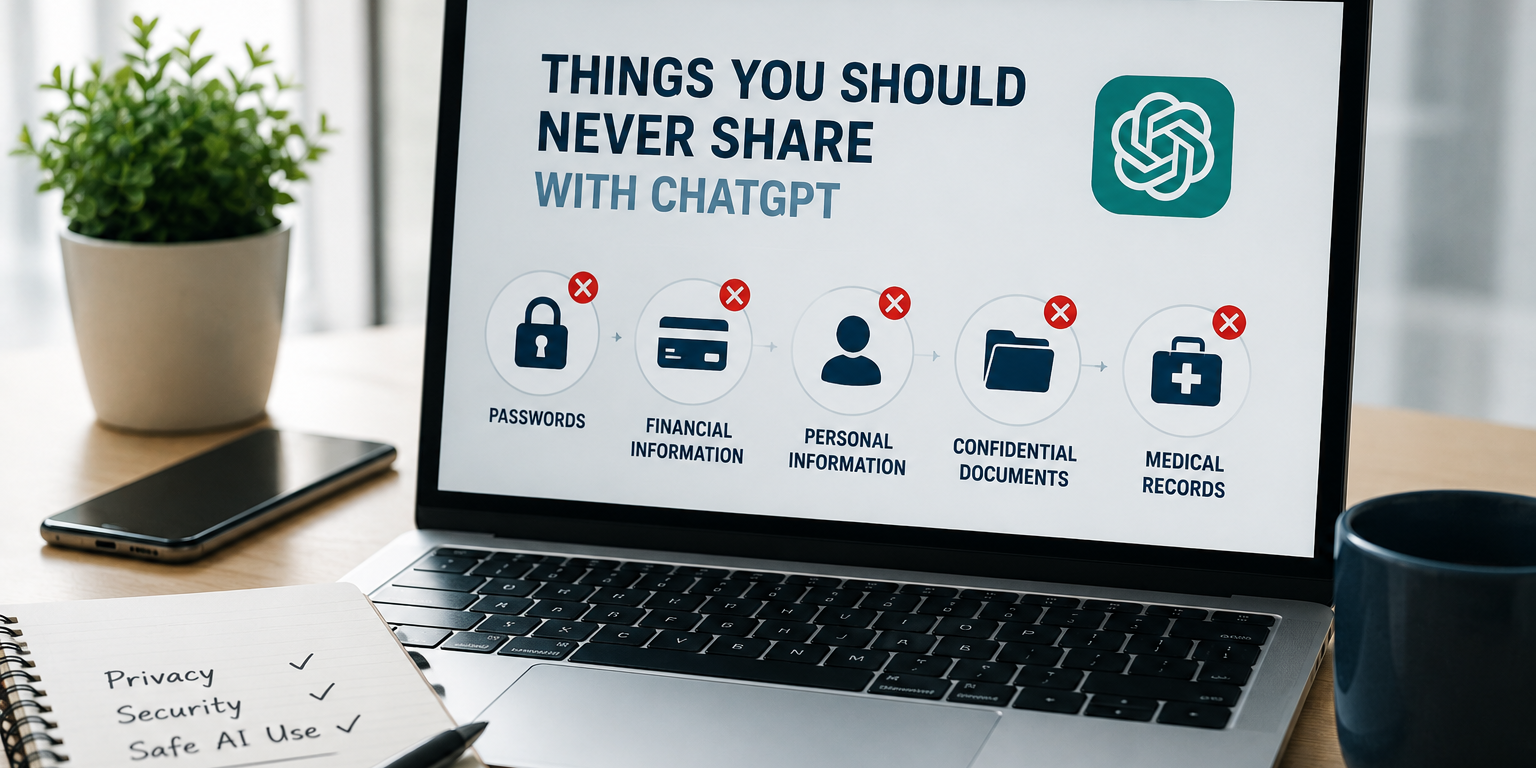
Things You Should Never Share With ChatGPT: Protect Your Privacy and Security
Artificial Intelligence tools like ChatGPT have become part of everyday life. From drafting emails and creating content to brainstorming ideas and solving problems, AI can be an incredibly useful assistant. However, as more people rely on AI platforms, it’s important to understand what information should never be shared with them.
While AI tools are designed to help users work more efficiently, sharing sensitive information can create unnecessary privacy and cybersecurity risks. Understanding safe AI practices is essential for both individuals and businesses.
Why AI Privacy Matters
Many users treat AI chatbots like trusted personal assistants, often sharing more information than they would on a public website. However, any information entered into an AI platform should be considered carefully before submission.
Whether you’re using AI for personal tasks or business operations, protecting sensitive data should always be a priority.
1. Never Share Passwords or Login Credentials
This may seem obvious, but people occasionally paste usernames, passwords, API keys, or authentication codes into AI tools while troubleshooting technical issues.
Sharing login credentials can expose accounts to unauthorized access and increase cybersecurity risks.
Avoid sharing
- Passwords
- One-time verification codes
- Security questions
- API keys
- Authentication tokens
Instead, replace sensitive details with placeholders when seeking technical assistance.
2. Don’t Enter Financial Information
Financial information should never be shared with AI chatbots.
This includes:
- Credit card numbers
- Bank account details
- Routing numbers
- Investment account information
- Tax identification numbers
Cybercriminals actively seek financial information, making it essential to keep these details private and secure.
3. Avoid Sharing Personal Identifiable Information (PII)
Personally identifiable information (PII) can be used for identity theft, fraud, and social engineering attacks.
Examples include:
- Full legal names
- Home addresses
- Phone numbers
- Government-issued ID numbers
- Passport information
- Social Security or national identification numbers
When using AI tools, only provide information that is necessary and avoid exposing personal details whenever possible.
4. Keep Confidential Business Information Private
Employees increasingly use AI tools for workplace productivity. However, confidential company information should never be entered into public AI systems without approval.
Sensitive business information may include:
- Client records
- Internal reports
- Financial projections
- Proprietary data
- Trade secrets
- Strategic business plans
Organizations should establish clear AI usage policies to protect corporate data and maintain compliance requirements.
5. Don’t Upload Sensitive Legal Documents
Legal agreements often contain confidential information that should remain private.
Avoid sharing:
- Contracts
- Settlement agreements
- Non-disclosure agreements (NDAs)
- Intellectual property documentation
- Legal case details
If AI assistance is needed, remove identifying and confidential information before uploading or pasting content.
6. Never Share Medical Records
Healthcare information is among the most sensitive data individuals possess.
Examples include:
- Medical diagnoses
- Prescription information
- Lab results
- Insurance details
- Patient records
While AI can help explain general health concepts, personal medical information should be handled carefully and shared only with trusted healthcare providers.
7. Be Careful With Customer Data
Businesses that use AI must be especially cautious when handling customer information.
Sharing customer records, email lists, support tickets, or personal account information may violate privacy regulations and damage customer trust.
Always anonymize data before using AI tools for analysis or content generation.
Best Practices for Safe AI Usage
To use AI responsibly while protecting your privacy:
- Review information before submitting it.
- Remove sensitive details whenever possible.
- Use placeholders instead of real personal data.
- Follow company AI policies and security guidelines.
- Verify how AI platforms handle user data.
- Limit the sharing of confidential information.
Final Thoughts
AI tools like ChatGPT can significantly improve productivity, creativity, and efficiency. However, users should remain mindful of the information they share.
Passwords, financial information, personal identifiers, confidential business data, legal documents, medical records, and customer information should never be entered into AI platforms without careful consideration.
By following basic cybersecurity and privacy best practices, individuals and organizations can safely benefit from AI while minimizing potential risk