



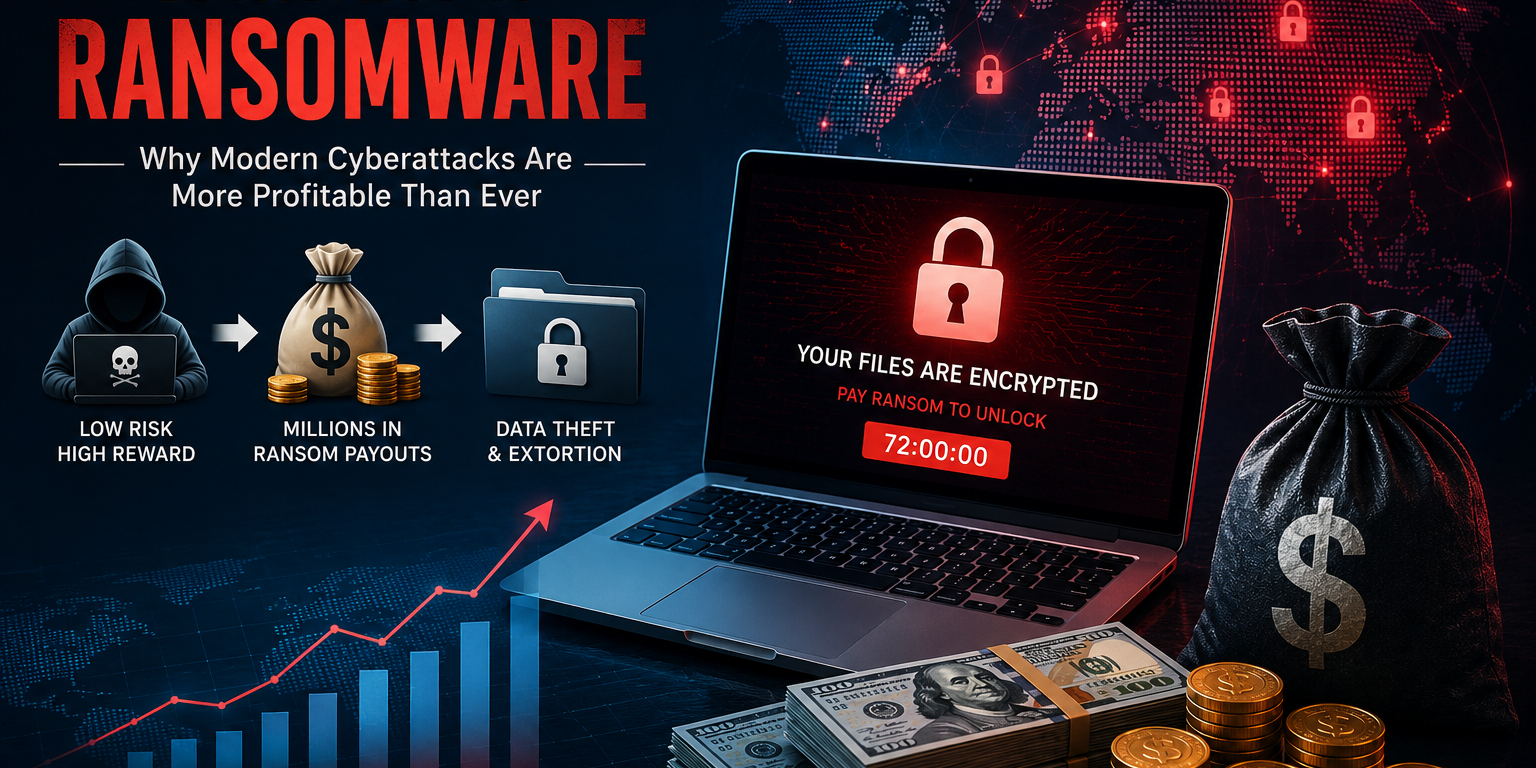
Economics of Ransomware: Why Modern Cyberattacks Are More Profitable Than Ever
Cybersecurity threats continue to evolve, but few have grown as rapidly as ransomware. Understanding the economics of ransomware is essential for businesses that want to protect their operations, customer data, and reputation. What began as a simple cybercrime tactic has transformed into a sophisticated business model that generates millions of dollars for criminal organizations every year. Recent ransomware groups operate much like legitimate companies, complete with specialized teams, service providers, and strategic planning.
What Is the Economics of Ransomware?
The economics of ransomware revolves around one simple principle: maximizing profit while minimizing effort. Early ransomware attacks targeted thousands of random victims with relatively small ransom demands. Today, cybercriminals focus on high-value organizations where a single successful attack can generate millions in revenue. This shift has made ransomware one of the most profitable forms of cybercrime.
Attackers carefully evaluate potential victims, their financial strength, operational dependencies, and likelihood of paying. By understanding these factors, cybercriminals can set ransom demands that maximize the chances of payment while delivering substantial returns.
Why Ransomware Has Become a Thriving Business
Modern ransomware operations resemble well-organized enterprises. Criminal groups employ developers, negotiators, marketers, and affiliates who share profits from successful attacks. Many operate under a “Ransomware-as-a-Service” (RaaS) model, allowing less-skilled criminals to launch attacks using tools developed by experienced cybercriminals.
This business-like structureas lowered entry barriers and increased the number of attacks globally. As a result, ransomware remains a persistent threat to organizations of all sizes.
Economics of Ransomware and the Rise of Triple Extortion
One of the biggest developments in the economics of ransomware is the emergence of triple extortion. Traditional ransomware focused solely on encrypting files and demanding payment for decryption. Today’s attacks go much further. According to cybersecurity experts, modern ransomware groups often:
- Encrypt critical systems and data
- Steal sensitive information before encryption
- Threaten to expose customer or corporate data publicly
- Contact customers, partners, or regulators directly to increase pressure
This multi-layered approach significantly increases the likelihood of payment because organizations face operational, legal, financial, and reputational consequences simultaneously.
How Data Theft Changes the Economics of Ransomware
Data exfiltration has fundamentally changed the ransomware landscape. Even if a company has reliable backups and can restore systems quickly, stolen data remains in the hands of criminals. Sensitive customer information, intellectual property, financial records, and confidential communications can all be used as leverage. This makes ransomware attacks far more damaging and difficult to recover from.
Economics of Ransomware vs. Cyber Insurance
For many years, organizations viewed cyber insurance as a safety net against ransomware attacks. However, the evolving economics of ransomware has exposed the limitations of relying solely on insurance coverage.
Cyber insurance may help cover certain financial losses, but it cannot reverse reputational damage, recover leaked intellectual property, or rebuild customer trust. Security experts increasingly emphasize that insurance should complement a broader cybersecurity strategy rather than serve as the primary defense mechanism.
Why Businesses Need a Mature Incident Response Strategy
A mature incident response framework can dramatically reduce the impact of ransomware attacks. Key elements include:
- Network segmentation
- Endpoint detection and response (EDR)
- Immutable and offline backups
- Employee cybersecurity awareness training
- Regular security assessments
- Incident response simulations and tabletop exercises
Organizations with well-tested response plans are typically able to contain attacks more effectively and recover faster than those relying solely on reactive measures.
The Future Economics of Ransomware
The future economics of ransomware will likely become even more sophisticated. Attackers continuously refine their methods, leverage automation, and adapt their tactics based on victim behavior. Research suggests that ransomware groups increasingly analyze industry trends, payment histories, and organizational structures to optimize their attacks.
While some reports indicate that fewer organizations are paying ransoms, attackers continue to increase pressure through data theft, extortion, and targeted campaigns. This means businesses cannot afford to become complacent.
Economics of Ransomware: Key Takeaways for Businesses
The economics of ransomware demonstrates why these attacks continue to grow despite increased cybersecurity awareness. Cybercriminals have built highly profitable operations that exploit organizational weaknesses and business pressures.
To stay protected, businesses should:
- Invest in proactive cybersecurity measures
- Develop comprehensive incident response plans
- Maintain secure and tested backups
- Train employees to recognize threats
- Continuously monitor and improve security controls
In today’s digital environment, cybersecurity is no longer just an IT concern—it is a critical business investment. Organizations that strengthen their defenses today will be far better positioned to withstand the ransomware threats of tomorrow.